
For Compliance & Safety
Be ready before the notice arrives.
When a product safety issue occurs, your team needs to establish what was affected, where it went, what remains on hand, and what action was taken. iPothecary gives compliance and safety teams a connected operational record to investigate and coordinate the response without starting from scratch.
The Reality
The questions arrive immediately. The answers shouldn't require an investigation.
When a recall is announced, compliance teams face a sequence of urgent questions in rapid succession.
Without a structured system, the investigation starts from scratch — with phone calls, spreadsheet lookups, and manual cross-referencing across purchasing records, POS exports, and paper logs. iPothecary provides the operational record that connects these answers before the recall arrives.
Traceability when it matters most
The recall workflow, step by step.
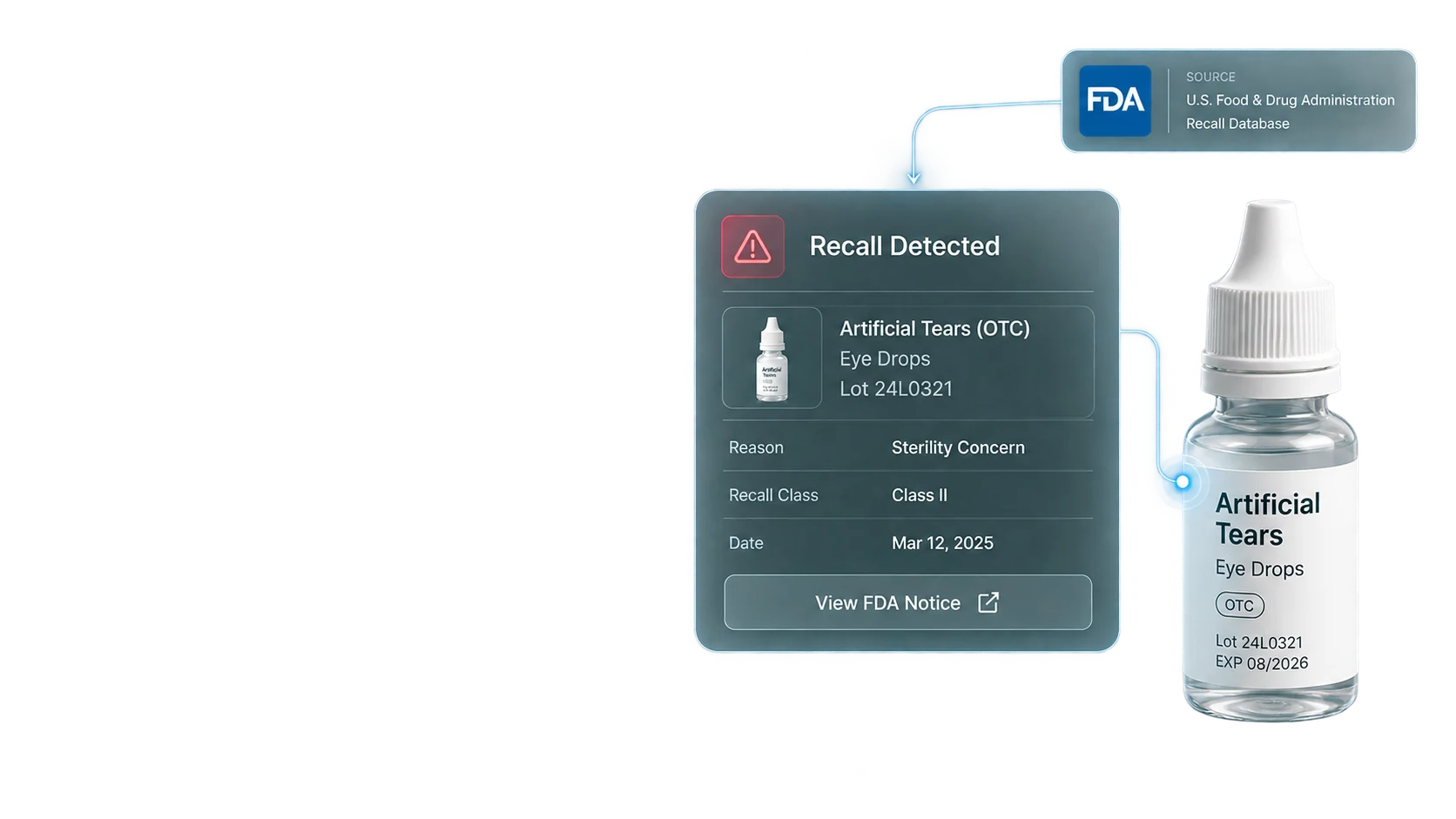
iPothecary helps trace a recall from announcement through documented response. Every step below represents information that exists in the system because the operational record was built from day one.
FDA recall notice or manufacturer safety communication received. Product identified by name, NDC, lot number, or UPC.
Product matched in catalog
Search the iPothecary catalog by NDC, UPC, product name, or manufacturer. Identify the exact product and package associated with the recall.
Affected lots identified
All received inventory for the product is tracked by lot number and expiration. The affected lot is matched against receiving records across all locations.
On-hand inventory located
Which offices received the affected lot. How much remains on hand. How much is already committed or reserved.
Hold placed on affected stock
Inventory quarantined across affected locations. Removed from available quantities. Recall hold documented with timestamp and responsible party.
Prior sales surfaced
Where transaction records are available, review sales involving the affected lot, including date and location, to support appropriate outreach.
Customer records available for outreach
Where patient contact information exists, it can be used to support outreach. Outreach actions are tracked separately from the inventory response.
Response documented
Every action — hold placement, inventory disposal, customer outreach, lot disposition — is timestamped and attributed. The response record exists whether or not it is ever reviewed.
Traceability Infrastructure
What makes the recall response possible
Lot-level receiving records
Every received shipment records lot number, expiration date, vendor, and purchase order. Lot traceability begins at the point of receiving, not during the investigation.
Product identification
The product catalog includes manufacturer, NDC, UPC, and package identifiers. A recall identified by NDC can be matched to a catalog product and all related inventory.
Multi-location inventory holds
Inventory holds can be placed across all locations simultaneously. Held stock is removed from available quantities and flagged for review or disposal.
Transaction history by lot
Transaction records identify which sales involved a specific lot, by location and date. Where patient information exists, it is accessible for outreach decisions.
Documented activity history
Inventory movements, holds, adjustments, and disposals can be recorded with timestamps and responsible users for later review.
Manufacturer information
Manufacturer and vendor information is part of the product record — not stored separately. A recall from a specific firm can be tied back to which products and lots came from them.
What iPothecary does and doesn't do
iPothecary helps identify affected inventory, helps document the response, and provides traceability that supports established recall workflows. It does not automatically satisfy recall requirements, guarantee regulatory compliance, or replace your organization's own safety and quality processes. Compliance decisions remain with your team.
What it does provide is the operational record that ensures the investigation doesn't start from scratch — because the traceability was built into day-to-day operations from the beginning.
Everyday product safety
Safety doesn’t begin and end with a recall.
Expiration exposure, questionable stock, product identity, holds, and disposition are part of the same operational discipline that makes exceptional events easier to investigate.
Implementation readiness
Recall readiness starts before the recall.
Implementation can help your organization define notice recipients, inventory holds, inspection responsibilities, escalation paths, and response documentation before a safety event occurs.
- Notice recipients and escalation
- Site inspection and affected-stock workflows
- Lot, expiration, hold, and disposition records
- Staff roles, training, and response documentation
When something goes wrong, don't start from scratch.
Request a walkthrough of the recall and traceability workflows for your organization.